Wired to Remember: How Creators Are Hacking the Brain's Cross-Sensory Circuitry to Build Unshakeable Brands

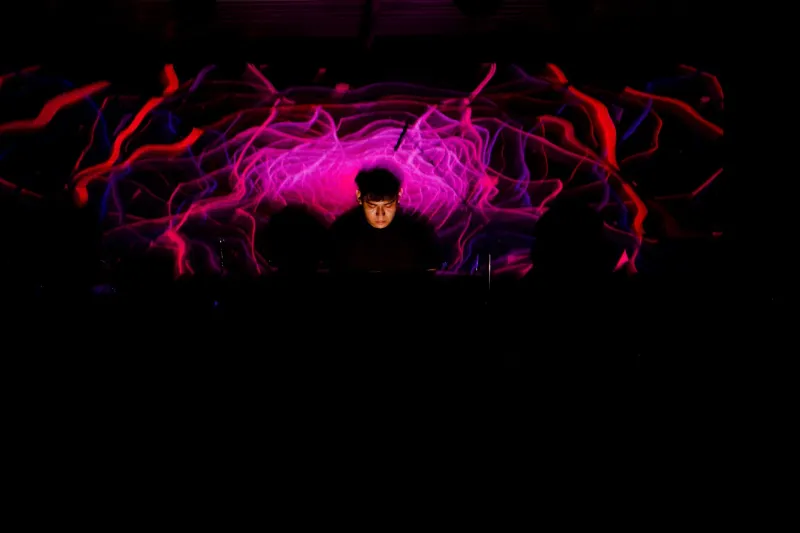
Photo by Photo by DL314 Lin on Unsplash on Unsplash
There's a moment — you've probably had it — where a specific song makes you think of a color. Or a smell drags you back to a place you haven't thought about in years. That's not poetry. That's your brain doing exactly what it was built to do: linking sensory information across channels to make memories stickier, faster, and harder to shake.
Neuroscientists call the extreme version of this synesthesia — a condition where senses genuinely cross-wire, where people literally hear colors or see music. But here's the thing most creators don't realize: every human brain has a milder version of this wiring running in the background. And if you're building a brand, you can absolutely learn to trigger it on purpose.
What's Actually Happening in There
The brain doesn't process your senses in isolated silos. Visual information, audio, touch, smell — they all feed into overlapping neural networks, and those networks are constantly comparing notes. When two sensory inputs consistently show up together, the brain starts to link them. Eventually, one can trigger the memory of the other even when it's not physically present.
This is called cross-modal correspondence, and it's been studied pretty extensively. Researchers have found, for example, that people reliably associate higher-pitched sounds with lighter colors and smaller shapes. Lower, bass-heavy tones tend to map to darker, heavier visuals. Sharp, angular imagery pairs intuitively with fast, staccato sound. Soft, rounded shapes feel warmer when paired with slow, melodic audio.
None of this is random. It's the brain pattern-matching at a speed your conscious mind can't keep up with. And for creators, that gap between conscious and unconscious processing is where brand loyalty quietly gets built — or doesn't.
The Accidental Architects
Some creators stumbled into this without a strategy document or a mood board meeting. Take the broader aesthetic that artists like Billie Eilish built in her early career — the muted greens, the oversized silhouettes, the whispered-then-explosive vocal dynamics. Whether fully intentional or not, those elements trained listeners and viewers to feel a specific emotional texture the moment any single piece of it appeared. Hear the breath before a note and you already know where you are.
On the creator side of things, plenty of YouTube and TikTok personalities have done something similar without ever reading a neuroscience paper. A specific color palette that shows up in every thumbnail. A consistent sonic intro — not just a jingle, but a texture. A particular editing rhythm that audiences start to recognize before they've consciously clocked why a video feels familiar.
The creators who figured this out early are the ones whose audiences describe their work with language that crosses sensory categories. "Her content just feels warm." "His videos sound expensive." "I don't know, it just tastes like a Sunday morning." That kind of language is your audience's brain telling you it got the message.
Building the Pathways Intentionally
So what does this look like when you're actually trying to engineer it? A few practical pressure points:
Commit to a sonic signature and stick with it. Not just a logo animation sound, but a tonal quality. Are your videos consistently warm and low-frequency? Bright and crisp? Layered and textured? Whatever it is, the consistency is the whole point. The brain needs repetition to build a pathway.
Let your visuals and audio agree with each other. This sounds obvious, but a lot of creators undermine themselves here. Warm, earthy visual palettes paired with cold, clinical sound design creates cognitive friction. Your audience can't quite put their finger on why something feels off — but they feel it. Make sure your visual identity and your audio identity are having the same conversation.
Use color the way composers use key signatures. A specific hue or palette can become as distinctive as a musical motif if you're consistent enough. Over time, that color starts to carry the emotional weight of everything your audience associates with you. Think about how completely Wes Anderson owns a particular shade of dusty pink — you see it somewhere random and your brain whispers his name.
Build transitions that carry your identity. The moments between things — the cut, the fade, the breath before you start talking — are underrated brand real estate. Those micro-moments are where your audience's nervous system is most open to being imprinted. A consistent rhythmic transition, a specific audio cue, a particular visual wipe: these become the equivalent of a handshake your audience starts to recognize before they've consciously registered it.
When It Goes Wrong
It's worth noting that cross-sensory branding can work against you just as efficiently as it works for you. If your early content had a chaotic, inconsistent aesthetic and you built an audience on it, those audiences have already formed neural associations — and pivoting hard can genuinely feel disorienting to them. The brain doesn't love having its established patterns disrupted.
This is part of why major brand redesigns are so fraught. Gap's infamous 2010 logo change didn't just offend people aesthetically — it broke a cross-sensory pattern that customers had spent years internalizing. The backlash wasn't really about the logo. It was about the cognitive whiplash of having a trusted sensory shortcut yanked away.
For creators, the lesson is: evolve gradually, carry your sonic and visual anchors with you through the change, and give your audience's brains time to update the pathway rather than just deleting it.
The Long Game
Here's what makes this genuinely exciting for independent creators and small brands: you don't need a massive production budget to build cross-sensory brand recognition. You need consistency and intentionality.
A creator shooting on an iPhone with a $30 ring light can absolutely build involuntary neural associations if they're deliberate about their color grading, their audio texture, their editing rhythm, and the emotional register they show up in every single time. The brain doesn't care how expensive your gear is. It cares about pattern repetition.
The creators who win long-term aren't necessarily the loudest or the most visually spectacular. They're the ones whose audience feels something specific and recognizable the moment any piece of their brand shows up — regardless of which sense picks up the signal first.
That's the synesthesia effect in practice. And honestly? It's one of the most powerful tools in the creator toolkit that almost nobody is talking about.