When Every Sense Knows Your Name: How Top Creators Are Building Brands You Can Almost Taste
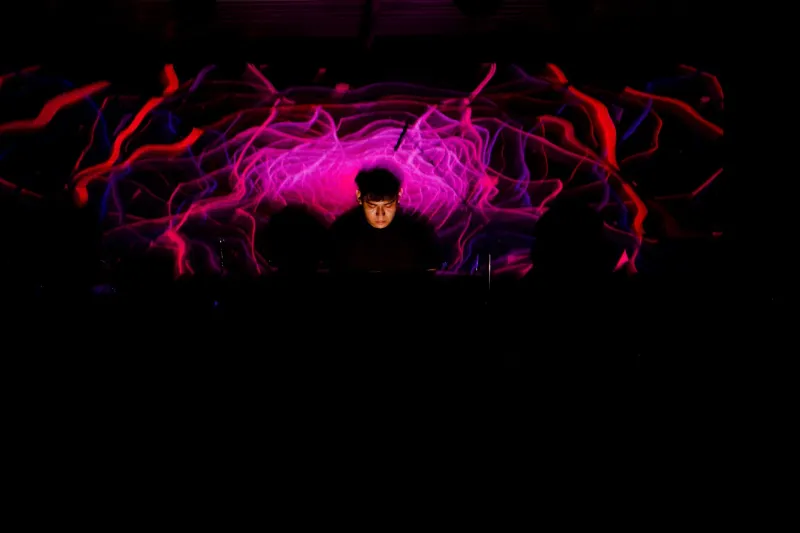
Close your eyes for a second. Think about your favorite creator. Not their latest video or their most viral post — just them. Chances are something specific comes up: a color palette, a vibe, maybe even a sound. That's not an accident. That's design.
The most intentional creators working right now aren't just thinking about what to post. They're thinking about how their brand feels across every possible touchpoint — visual, auditory, even textural. They're borrowing a concept from neuroscience and art that's been around for centuries, and they're using it to cut through the noise in a way that pure aesthetics or clever hooks simply can't match.
Welcome to the synesthesia strategy.
What Is Synesthetic Branding, Actually?
Synesthesia is a neurological phenomenon where stimulation of one sense automatically triggers another — some people literally see colors when they hear music, or associate specific shapes with particular smells. It's involuntary, vivid, and deeply personal. About 4% of people experience it clinically, but here's the thing: everyone has mild synesthetic tendencies. Your brain is constantly making cross-sensory associations, whether you realize it or not.
That's exactly what creators are tapping into.
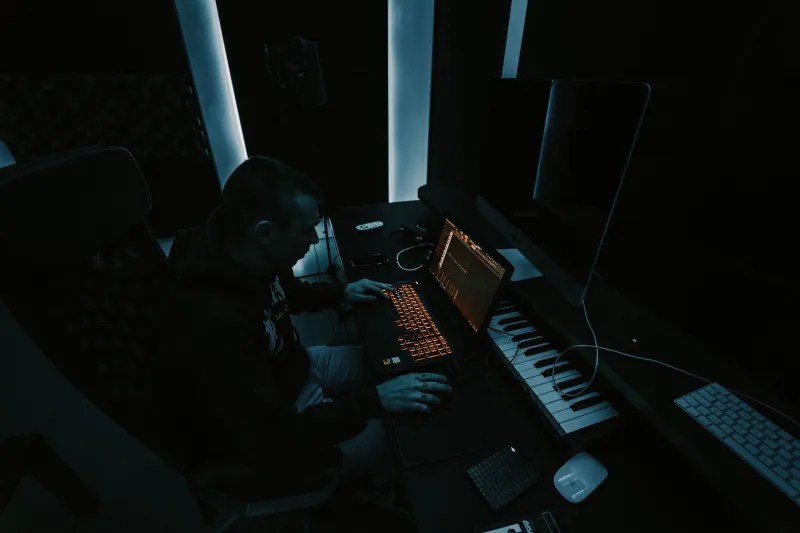
Synesthetic branding isn't about literally making your audience see sounds. It's about deliberately constructing a sensory ecosystem where every element — the warm amber tones in your thumbnails, the lo-fi piano loop that opens every video, the specific cadence of your voiceover — reinforces the same emotional frequency. When it works, your audience doesn't just recognize you. They feel you before they even consciously register who they're looking at.
The Neuroscience That Makes It Stick
Here's the part that should genuinely blow your mind: multisensory experiences are processed differently in the brain than single-sense inputs. Research from neuroscientists like Charles Spence at Oxford has shown that when multiple senses receive aligned information simultaneously, memory encoding is significantly stronger. You don't just remember the thing — you anchor it.
Brands have known this for decades. Think about the MGM lion's roar, or the way Harley-Davidson's engine sound is so distinctive the company actually tried to trademark it. That's synesthetic thinking at a corporate level. Creators are now doing the same thing, just with way less budget and way more personality.
The magic happens in something called the superior temporal sulcus — a region of the brain that integrates information across sensory channels. When your audio signature, your color palette, and your editing rhythm all feel like they belong to the same emotional world, that brain region lights up like a pinball machine. The result? Recognition that bypasses rational thought and goes straight to feeling.
Creators Who Are Already Doing This
You don't have to look hard to find examples. Take the wave of ASMR creators who've evolved beyond just sound. The most successful ones have built entire visual languages — specific color temperatures, predictable object arrangements, consistent fabric textures — that prime your nervous system before a single sound even plays. The visual tells your brain what kind of sound is coming, and when that prediction is confirmed, the satisfaction is doubled.
Or look at what's happening in the lo-fi and study-with-me space on YouTube. Channels like those featuring animated rain-soaked windows and jazz-adjacent beats aren't just providing background music. They've constructed a full sensory narrative: the visual texture of the animation style, the warm-cool color contrast, the specific tempo of the music — it all adds up to a feeling that millions of people now associate with productivity and calm. That's a brand. Built entirely out of sensory alignment.
In the fashion and lifestyle space, creators who've broken through tend to have an almost obsessive consistency between their visual palette and their audio environment. The warm, slightly desaturated tones that signal "vintage thrift aesthetic" pair almost universally with indie folk or soft acoustic tracks. The crisp, high-contrast visuals of the "clean girl" era came bundled with a specific sonic texture — airy, minimal, almost clinical. Neither of these is coincidental. Creators learned, consciously or not, that the sensory package had to be coherent.
How to Build Your Own Sensory Map
If you're a creator trying to develop this intentionally, start with emotion rather than aesthetics. Ask yourself: what is the one feeling I want someone to have within the first three seconds of encountering my content? Not the topic, not the message — the feeling.
From there, reverse-engineer the sensory inputs that reliably produce that feeling for most people. Warm tones, slower cuts, and low-frequency audio tend to signal safety and intimacy. Cool tones, faster pacing, and higher-pitched sounds signal energy and urgency. These are generalizations, but they're grounded in real perceptual psychology.
Then — and this is the part most creators skip — write it down. Make yourself a sensory style guide. What's your color range? What's your audio signature (an intro sound, a specific reverb style, a tempo range)? What's the pacing rhythm of your edits? These shouldn't just live in your head. They should be documented so that every piece of content you produce gets run through the same sensory filter.
The Oversaturation Problem — and Why This Solves It
Here's the reality of the creator economy right now: there is more content than any human being could ever consume, on every platform, in every genre, at every quality level. The old answers to standing out — better lighting, better scripting, better thumbnails — are table stakes. Everyone has them now.
What's genuinely rare is coherence. The creator who makes you feel a specific way, consistently, across every single post, video, and Story — that's the one who builds a loyal audience. Because loyalty isn't about preference. It's about recognition. When your audience can identify your content before they see your name, you've crossed a threshold that no algorithm can replicate or replace.
Synesthetic branding is how you get there. Not by adding more — more effects, more production value, more content — but by aligning what you already have into a single, unified sensory signature.
Sound Meets Vision Meets You
At Otosata, we think a lot about the intersection of sound and vision — it's kind of baked into our DNA. And what excites us about the synesthesia strategy isn't just the neuroscience or the marketing theory. It's what it means for individual creators with something real to say.
When your sensory world is coherent, your audience doesn't just consume your content. They inhabit it, even briefly. They step into a space that feels like you — and that's something no trending audio or viral format can manufacture.
The creators building lasting careers right now aren't the ones chasing the algorithm. They're the ones building a world specific enough to be unmistakable, and sensory enough to be unforgettable.
Start with a feeling. Build outward from there. And make sure every sense in the room knows your name.