The Mess Is the Message: Why Your Unfinished Work Is Your Most Valuable Content
I want to talk about a studio session clip I saw recently. No finished track. No announcement. Just a producer hunched over a keyboard, scrapping a chord progression for the fourth time in a row, muttering something under their breath, and eventually landing on something that made them physically sit back in their chair.
That clip got more engagement than the official music video they dropped two weeks later.
That's not a fluke. That's a signal.
We Are Done Pretending the Curtain Doesn't Exist
For a long time, the dominant creative playbook was simple: make the thing, perfect the thing, release the thing. The audience only saw the destination. The messy, doubt-filled, occasionally embarrassing journey was yours to deal with privately.
That model is crumbling in real time.
Audiences — especially younger US audiences raised on reality TV, unfiltered social media, and parasocial creator relationships — have developed a finely tuned radar for performance. They can smell a curated persona from three feeds away. And increasingly, they're not just indifferent to it. They're actively turned off by it.
What they want instead is the studio diary. The sketchbook page. The draft that almost didn't make it. The moment a creator genuinely doesn't know what they're doing yet.
Vulnerability as Strategy (Not Just Therapy)
Let's be honest about something: talking about "showing your process" can veer quickly into self-help territory, and that's not what this is. This is about cold, hard creative economics.
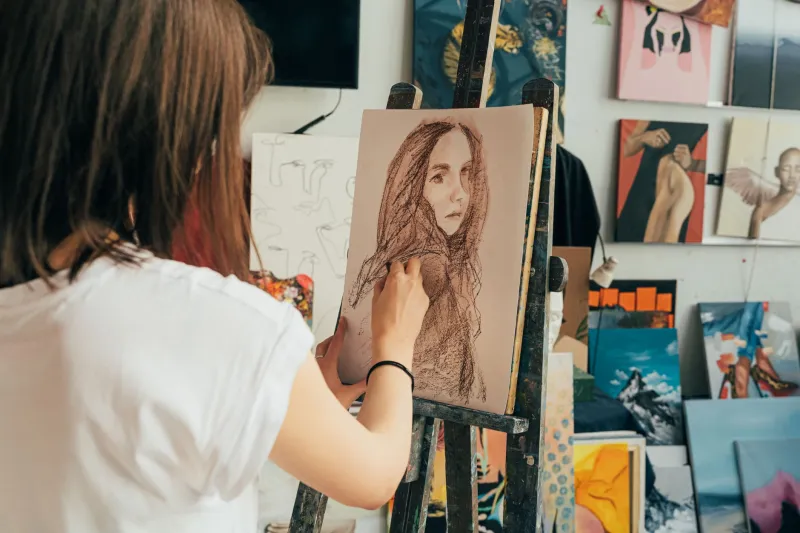
When visual artist Molly Bounds started posting her painting process on Instagram — not the finished gallery-ready pieces, but the stages where the canvas looked genuinely terrible — her follower count did something unexpected. It didn't just grow. The quality of her audience changed. Direct message rates went up. Print sales went up. People started referring to her work like they had a personal stake in it, because they did — they'd watched it get made.
That's the backstage effect in action. When an audience witnesses creation in real time, they stop being consumers and start feeling like collaborators. They become emotionally invested in the outcome because they were present for the uncertainty.
And emotionally invested audiences buy things. They show up. They tell people.
The Production Chaos That Became a Brand
Music is where this shift has been most dramatic and most instructive. The traditional album rollout — controlled, sequenced, mysterious — is being disrupted by creators who've figured out that the making of an album can be its own extended release event.
Producer and multi-hyphenate creative Finneas, best known for his work with Billie Eilish, has been remarkably open about the bedroom-studio origins of some of the most-streamed songs of the last decade. That transparency didn't diminish the music. It created a mythology around it. The constraints — the small room, the modest setup, the sibling dynamic — became part of the product's identity.
Similarly, designers and visual artists who've started live-streaming their work process on Twitch have discovered something the gaming community knew years ago: watching someone get good at something in real time is genuinely compelling entertainment. The failures aren't liabilities. They're plot points.
Why "Raw" Doesn't Mean "Unintentional"
Here's where I want to pump the brakes slightly, because there's a version of this that goes wrong.
Showing your process is not the same as having no standards. The creators who pull this off well are not simply pointing a camera at their desk and walking away. They're making deliberate choices about which parts of the mess to share, how to frame the vulnerability, and when the chaos serves the narrative versus when it's just noise.
Think of it like a documentary versus a security camera feed. Both capture reality. Only one of them is worth watching.
The best process-forward creators have an editorial sensibility about their behind-the-scenes content that's just as developed as their sensibility about finished work. They know which struggle is relatable and which is just confusing. They know when to let a moment breathe and when to cut. They understand that "authentic" is not a synonym for "unedited."
What This Means for How You Build
If you're a creative professional thinking about your own brand — whether you're a musician, a designer, a filmmaker, or something harder to categorize — the practical takeaway here is pretty clear: your process has an audience, and that audience might be more valuable than the one you're currently chasing.
Start small. A quick voice memo about why you scrapped an idea. A photo of the third draft that looked nothing like the final. A 30-second clip of you working through something that isn't figured out yet. You don't need a production team. You need honesty and a point of view.
The creators who'll define the next wave of online culture aren't going to be the ones with the smoothest rollouts or the most pristine feeds. They'll be the ones who made their audience feel present for something real — the stumbling, the second-guessing, the eventual moment of clarity.
The mess, it turns out, is the whole point.