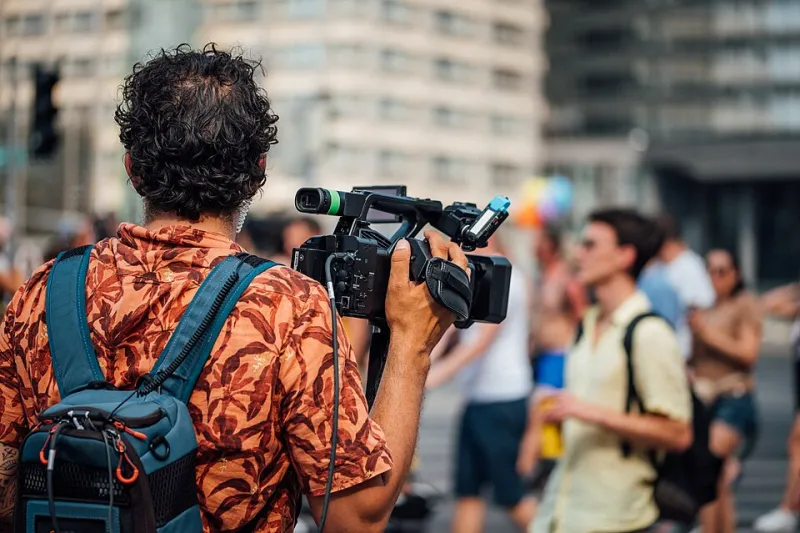
Perfectly Polished Is So Last Year: Why the Realest Creators Are Winning Right Now
Photo: Harald Krichel, CC BY-SA 3.0, via Wikimedia Commons
Let's be honest for a second. How many times have you scrolled past a flawlessly produced video — perfect lighting, immaculate set design, transitions so smooth they'd make a film editor cry — and felt absolutely nothing? And then, thirty seconds later, you stumbled onto someone filming themselves in a car, mid-thought, half-distracted, and you watched the whole thing twice?
That gap? That's the story of 2024.
The Aesthetic Arms Race Nobody Is Winning
For years, the conventional wisdom went something like this: if you want to be taken seriously as a creator, you need to look serious. Invest in the camera. Nail the thumbnail formula. Build a cohesive color palette. Make everything feel like a brand, because brands get deals.
And for a while, that wasn't wrong. YouTube's early golden era rewarded production quality. Instagram was basically a visual portfolio contest. The creators who looked the most put-together got the brand partnerships, the speaking gigs, the book deals.
But something shifted. Audiences got sharper. Algorithms got smarter. And people started to notice that the most polished content was often the emptiest.
When everything looks premium, nothing feels personal. And personal is exactly what people are starving for right now.
What the Numbers Are Actually Telling Us
You don't need a media research degree to see the pattern. TikTok's most-shared content consistently skews raw and reactive. The clips that go viral aren't usually the ones with the highest production budgets — they're the ones where someone says something real, stumbles through a thought, or shows a side of themselves that wasn't scripted.
Creators who've built massive audiences on YouTube or Instagram in the last two years often describe a turning point: the video they almost didn't post because it felt too unfinished, too personal, too unpolished — that's the one that cracked things open for them.
The algorithm isn't rewarding aesthetics. It's rewarding engagement. And people engage with things that feel true.
Sound Before Image: The Personality-First Playbook
Here's where it gets interesting from where we sit at Otosata. The creators who are cutting through the noise right now aren't just leaning into imperfect visuals — they're leading with voice. Literally.
The way someone speaks, the cadence of their thoughts, the particular way they laugh at their own jokes — that's the fingerprint that makes an audience feel like they actually know you. It's harder to fake than a clean background. It's more durable than a visual brand that trends this season and looks dated by next spring.
Think about the creators you genuinely follow versus the ones you just passively consume. The ones you follow probably have a distinct voice. You'd recognize them in a podcast. You'd know their sense of humor from a single tweet. Their aesthetic might be all over the place, but their personality is completely consistent.
That consistency — that sonic and tonal signature — is the thing the algorithm rewards, because it's the thing that keeps people coming back.
The Authenticity Paradox
Now, here's the part that gets a little complicated. Authenticity in 2024 has become its own kind of performance. There are creators who have very deliberately crafted a "raw and unfiltered" persona that is, in fact, meticulously managed. The messy room is staged. The emotional breakdown was a third take.
Audiences are getting wise to this, too. The bar isn't just "look imperfect." It's actually be consistent. It's mean what you say across multiple contexts, over time, without the story changing based on what's convenient.
The creators who are truly winning aren't just performing authenticity — they've built an identity that holds up. Their values show up in their content whether they're posting a casual story or a produced video. Their voice sounds the same on a podcast as it does in a comment reply. There's no gap between the brand and the person.
That coherence is what audiences are actually responding to. And it's a lot harder to manufacture than a good lighting setup.
What This Means If You're Still Chasing the Aesthetic
None of this means production quality is dead. A well-shot video is still a well-shot video. Good audio still matters enormously — maybe more than ever, since so much content is consumed with earbuds in while people are doing something else entirely.
But if you're spending more energy on how your content looks than on what it actually says — or who it reveals you to be — you might be optimizing for the wrong thing.
The most honest question you can ask yourself as a creator in 2024 isn't "does this look good?" It's "does this sound like me?"
Because the audience can tell the difference. And increasingly, so can the algorithm.
Start with something real. The aesthetic can come later.